The Last Leaf
The Art of Holding On
· 12 min read
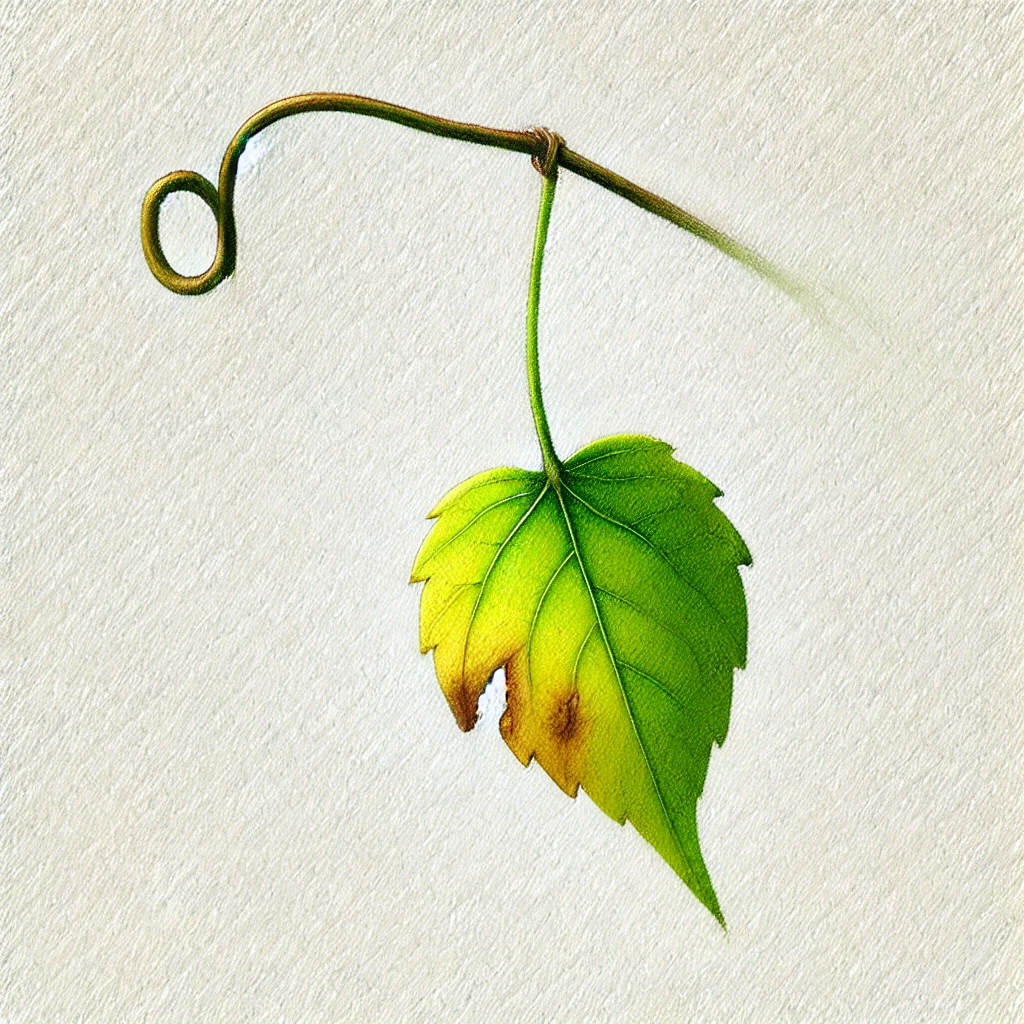
The Last Leaf
Greenwich Village had once been a haven for artists drawing them with its cheap rent and quaint atmosphere. But by the 2010s, everything had changed. Rents had skyrocketed, and the upscale establishments had become far too expensive for struggling artists.
In a burgeoning neighborhood of Brooklyn, the streets twisted and broke into tiny alleyways known as "places." These "places" formed peculiar shapes and patterns, with some streets even looping back on themselves. An artist had once noted the potential of these streets for a bit of whimsy. "Imagine a painter," he said, "carrying supplies of paint, paper, and canvas, who could, in taking this route, encounter their own image walking just ahead!"
Soon, young artists came searching for brownstones with south windows, Dutch attics, and affordable rent. They brought their teak kitchen utensils and sketching boards from Boerum Hill and established what they called a "colony."
At the top of a three-story brick building, Sue and Lexi had their studio. "Lexi" was short for Alexandria, a name she took from her Mexican abuela. Sue was from Nebraska—tall with a wiry body and a shock of blonde hair shorn to one side. They had met at a restaurant on North 7th Street, discovering similar tastes in art, kale salad, and bell sleeves, which led them to set up a shared studio together.
That was in May of 2019. By March of the following year, winter had refused to release its grip, and an unwelcome intruder that doctors called COVID-19 stalked the colony, touching residents here and there with its deadly presence. On the east side of the city, this disease spread rapidly, claiming victims by the score, but it moved more slowly through the maze of narrow, vine-covered "places."
COVID wasn't a disease that looked for a fair fight. It preferred the elderly and those with existing health conditions, the word "comorbidity" becoming a grim part of daily conversation. Lexi, a small woman with blood thinned by gentle California breezes and Mexican sun, seemed an unlikely target for the virus. She was young and typically wouldn't have been its usual victim, but the disease struck her nonetheless, perhaps drawn to her delicate nature. Now she lay in her bed, barely moving, looking through the small Dutch window-panes at the blank side of the next brick house, her breathing slow and labored.
Hector, a nursing assistant at Brookdale Hospital, lived at the end of their hallway. He had been helping care for Lexi when he could, between his grueling shifts at the hospital that was overwhelmed with COVID cases. Despite exhausting all his connections, he couldn't secure a hospital bed for her. The wards were filled with critical patients on ventilators, and the medical staff was stretched beyond their limits. Hector believed Lexi's best hope was to remain at home under Sue's care, with the rest left to faith.
One morning, he visited and gestured for Sue to join him in the hallway with a raised eyebrow and a slight nod. She searched his face, once filled with optimism but now worn down by witnessing countless deaths during his shifts.
"She has one chance in ten," he said quietly, putting away his pulse oximeter. "And that chance depends on her will to live. Sometimes when patients give up, they make a mockery of all our medical science. Your friend has convinced herself she's not going to recover. Is there anything that gives her hope?"
"She's always wanted to paint the Gulf of Salerno someday," Sue replied.
"Paint? That's not what I mean," Hector said. "Is there anything truly meaningful to her—something worth fighting for?"
"Like what? A boyfriend?" asked Sue with an edge in her voice. "No, that's not in the picture."
Hector looked away. "Then it's the illness draining her life away," he said. "We'll do what we can, but when patients start envisioning their own funerals, I have to cut their chances in half. If you can get her to show interest in something—anything she cares about—I'll improve her odds to one in five instead of one in ten."
After Hector left, Sue went into the workroom and cried until her napkin was a soggy mess. Then she composed herself, strode into Lexi's room with her drawing board, and hummed a tune from the last Broadway show they'd attended before the shutdown—tickets she'd received from her editor when she was still going into the office.
Lexi lay motionless under the bedcovers, facing the window. Sue stopped humming, thinking her friend was asleep.
Sue returned to her part of the studio, set up her sketch board, and began a pen-and-ink drawing to illustrate a magazine story. Young artists paved their way to Art by creating illustrations for magazine stories that young authors wrote to pave their way to Literature.
As Sue sketched scuffed leather chaps and a threadbare flannel shirt for her Idaho cowhand character, she heard a soft sound repeated several times. She rushed to Lexi's bedside.
Lexi's eyes were wide open, staring out the window and counting backward.
"Twelve," she said, and after a pause, "eleven," then "ten," and "nine," followed by "eight" and "seven" almost together.
Sue looked anxiously out the window. What was Lexi counting? There was only a bare, dreary yard and the blank side of a brick building twenty feet away. An old ivy vine, gnarled and decayed at the roots, climbed the brick wall, reaching to where Lexi was gazing. Winter's cold breath had stripped most leaves from the vine, leaving skeletal branches clinging to the crumbling bricks.
"What is it, dear?" asked Sue.
"Six," whispered Lexi. "They're falling faster now. Three days ago, there were almost a hundred. It made my head ache to count them. But now it's easy. There goes another one. Only five left now."
"Five what, dear? Tell me."
"Leaves. On the ivy vine. When the last one falls, I must go, too. I've known that for three days. Didn't Hector tell you?"
"That's nonsense," said Sue with deliberate confidence. "What do ivy leaves have to do with your recovery? You used to love that vine. Don't be silly. Hector told me your chances for getting well soon were—let's see exactly what he said—he said the odds were ten to one! That's better than our chances riding the subway in New York. Try to take some chicken broth now, and I'll go back to my drawing so I can sell it to my editor, buy some port wine for you, and a pork tenderloin for myself."
"Don't bother with more wine," said Lexi, her eyes fixed on the window. "There goes another. No, I don't want any broth either. That leaves just four. I want to see the last one fall before dark. Then I'll go, too."
"Lexi, please," said Sue, leaning over her, "promise me you'll keep your eyes closed and not look out the window until I finish working? I need to submit these drawings tomorrow. I need the light, or I'd pull the shade down."
"Couldn't you draw in the other room?" Lexi asked coldly.
"I'd rather stay near you," said Sue. "Besides, I don't want you fixating on those ivy leaves."
"Tell me when you're done," said Lexi, closing her eyes and lying still as a statue. "I want to see the last leaf fall. I'm tired of waiting. I'm tired of thinking. I want to let go of everything and drift away, just like one of those poor, tired leaves."
"Try to sleep," said Sue. "I need to ask Gonzolas to model for the old rancher character. I won't be gone long. Don't try to move until I get back."
Gonzolas was a painter who lived on the ground floor beneath them. In his seventies, he had a magnificent beard curling down from his head like Michelangelo's Moses, but with the face of a satyr. Despite five decades wielding a brush, Gonzolas had never achieved artistic success. He had always talked about painting a masterpiece but had never begun it. For years, he had produced nothing except occasional commercial work. He earned a little by modeling for young artists in the colony who couldn't afford professional models. He drank tequila excessively and still spoke of his future masterpiece. Otherwise, he was a fierce little old man who despised weakness in anyone and considered himself a self-appointed guardian of the two young artists in the studio above.
Sue found Gonzolas smelling strongly of agave in his dimly lit apartment. In one corner stood a blank canvas on an easel that had been waiting for years to receive the first stroke of his masterpiece. She told him about Lexi's fixation on the ivy leaves and her fear that the fragile young woman might indeed drift away as her grasp on life weakened.
Gonzolas, his red-rimmed eyes visibly moist, loudly expressed his contempt for such thinking.
"Ay, mija!" he exclaimed. "People choose to die just because some leaves fall off a vine? That's the most ridiculous thing I've heard. No, I won't pose for that crazy idea. Why do you let her think such nonsense? Ah, poor little Miss Lexi."
"She's very ill and weak," Sue replied. "The fever has left her mind filled with strange ideas. Fine, Mr. Gonzolas, if you don't want to pose for me, you don't have to. But I think you're a horrid old windbag."
"You're acting just like a woman!" the old man grumbled. "Who said I won't pose? Let's go—claro que sí, I'll come with you. I've been trying to say for half an hour that I'm ready. Ay, Dios! This isn't a place for a sweet girl like Miss Lexi to be sick. One day I'll paint my masterpiece, and we'll all get out of here—sí."
Lexi was sleeping when they went upstairs. Sue pulled the shade down to the windowsill and motioned Gonzolas into the other room. There they looked fearfully at the ivy vine through the window before exchanging a wordless glance. A persistent, cold rain was falling, mixed with snow—the beginning of a fierce storm. Gonzolas, in his old blue shirt, sat on an upturned bucket posing as the old rancher.
When Sue woke from an hour's sleep the next morning, she found Lexi staring at the drawn green shade with dull, wide-open eyes.
"Pull up the shade; I want to see," she ordered in a whisper.
Reluctantly, Sue obeyed.
But remarkably, after the beating rain and fierce gusts of wind that had battered the building all night, one ivy leaf still clung to the brick wall. It was the last on the vine. Still dark green near its stem but with yellowing edges showing signs of decay, it hung bravely from a branch about twenty feet above the ground.
"It's the last one," said Lexi. "I thought it would fall during the night. I heard the wind. It will fall today, and I'll die when it does."
"Please," said Sue, resting her tired face against the pillow. "Think of me, if not yourself. What would I do without you?"
Lexi didn't answer. The loneliest thing in the world is a soul preparing for its mysterious, far journey. This idea seemed to possess her more strongly as her connections to friendship and life loosened one by one.
The day passed, and even through the twilight, they could see the solitary ivy leaf clinging to its stem against the wall. As night fell, the north wind returned while rain continued to beat against the windows and patter down from the low Dutch eaves.
When morning light filtered in, Lexi demanded that the shade be raised.
The single ivy leaf remained.
Lexi gazed at it for a long time. Then she called to Sue, who was heating chicken broth on the stove.
"I've been a bad girl, Suzy," said Lexi. "Something has made that last leaf stay there to show me how wrong I was. My abuela says it is a sin to want to die. You can bring me some broth now, and maybe a little port wine, and—no, bring me a mirror first, then prop me up with pillows so I can watch you cook."
An hour later she said, "Suzy, I'm going to paint the Gulf of Salerno someday. And you'll pose for me there."
Hector visited that evening, and Sue made an excuse to follow him into the hallway as he left.
"Did you notice her breathing? It's improved. Even chances now," said the nurse, taking Sue's thin hand in his. "With good care, you'll win. Now I need to check on another patient downstairs—Gonzolas, the artist. He has pneumonia, not COVID. He's elderly and weak, and it's a severe case. He needs oxygen, and I think I can get him into the ICU today. We may have an opening. He'll be more comfortable there. Morphine will help him sleep, but I don't have much hope for him."
The next day, Hector returned from the hospital to check on Lexi and afterward told Sue, "She's out of danger. You've won. Good nutrition and care now—that's all she needs."
That afternoon, Sue sat beside Lexi, who was contentedly knitting a very green and yellow woolen shoulder scarf. Sue put one arm around her, pillows and all.
"I have something to tell you, my little brown mouse," Sue said gently. "Mr. Gonzolas died of pneumonia today in the hospital. He was only ill for two days. The janitor found him on the morning after the big storm in his room downstairs, incapacitated with pain. His shoes and clothing were soaking wet and freezing cold. They couldn't understand why he had gone out on such a terrible night. But then they found a still-lit electric lamp, a ladder that had been moved from its place, scattered brushes, and a palette with green and yellow colors mixed on it. Look out the window, dear, at the last ivy leaf on the wall. Isn't it beautiful? Didn't you wonder why it never moved when the wind blew?"
"Oh, Sue..."
"Yes, darling. It's Gonzolas's masterpiece—he painted it there the night that the last leaf fell."
© 2025 XoSelf, LLC. All rights reserved.
This work is a modern adaptation of "The Last Leaf" by O. Henry.
No part of this publication may be reproduced, distributed, or transmitted in any form or by any means without the prior written permission of the publisher.
Stay Updated
Subscribe to get more insights delivered to your inbox.
Originally published on Substack.